
Why Most Buyers Focus on the Wrong Details
Walk through any replica forum and you will see the same pattern. Buyers spend weeks comparing dial font thickness, bezel engraving depth, and whether the crown logo is a fraction of a millimeter too tall. These details matter to a point. But here is what I have learned after going through more than a dozen Daytona replicas: the top factories already get the exterior right. Clean Factory, VS Factory, and a few others have been refining their cases and dials for years. At arm’s length, on a wrist, at dinner, the exterior differences between a $500 replica and a $1,200 one are almost invisible.
The movement is where the real quality gradient lives. A cheap movement will lose time, develop a grinding winding feel, and eventually stop. A properly cloned 4131 will wind smoothly, keep time within a few seconds a day, and survive years of daily wear if maintained. That is not marketing talk. That is the difference I have felt on my own wrist.
One common mistake is buying based on exterior photos alone. Sellers know that buyers scroll through images before reading specs. So they invest in good lighting and a clean dial, and they cut corners on the movement because nobody sees it. The result is a watch that looks great in the listing and feels wrong within a week. The best replica watches on the market today have reached a point where the exterior is genuinely difficult to distinguish without magnification. But open the caseback of a $300 fake and a $1,200 one side by side, and you will see two completely different levels of engineering.
The practical impact is simple. If you buy for looks alone, you will end up with a watch that photographs well and disappoints every time you wind it. If you buy for the movement, you end up with a watch that feels solid, keeps time, and does not make you regret the purchase three months later. When I first started comparing options, I used Rolex replica to understand movement tiers before I committed to anything. That step alone saved me from two bad purchases.
What the 4131 Clone Actually Is and Why It Matters
The 4131 is Rolex’s current-generation chronograph movement, introduced in 2023 as the successor to the long-running 4130. It powers the modern Daytona references, including the 126500LN and the platinum 126506 with the exhibition caseback. In the replica world, the 4131 clone represents the current ceiling of what is available. Understanding its architecture tells you exactly why it costs what it costs and why some sellers charge more for the same exterior.
Is It a True 1:1 Clone?
The short answer is no, not in the strict sense. A genuine 1:1 clone would mean every component is interchangeable with the original. That is not what you are getting. What the best factories produce is a movement that replicates the functional architecture of the 4131: the column wheel, the vertical clutch, the bidirectional winding, and the overall gear train layout. The dimensions are close enough that the movement fits the case without modification, and the visual appearance under the rotor is convincing.
The distinction matters because some sellers will advertise “1:1 clone” and deliver a movement that has the right look but the wrong internals. From what I have seen, the honest factories are transparent about this. They will tell you it is a clone or super clone and explain exactly which parts are replicated and which are approximations. The sellers who scream “1:1 perfect replica” the loudest are usually the ones cutting the most corners. If you are buying a rolex clone, ask for movement photos with the caseback removed. A seller who cannot provide them is a seller who does not want you to see what is inside.
Real-World Stability and Service Reality
The genuine 4131 has a power reserve of approximately 72 hours. The best clone versions match this figure closely, which means you can take the watch off on Friday evening and it will still be running on Monday morning. This is not a trivial spec. A 40-hour movement that stops overnight feels like a toy. A 72-hour movement that survives a weekend feels like a real watch.
In terms of timekeeping stability, the clone 4131 from the top factories holds within a few seconds per day in normal wear. That is not chronometer-grade, but it is well within the range of what most owners will tolerate. The more important metric is consistency. A movement that gains three seconds every day is far more useful than one that gains two seconds one day and loses fifteen the next.
Maintenance difficulty is where the clone 4131 shows its limitations. Not every watchmaker will work on a cloned movement, and the ones who do will charge more than they would for a standard ETA service. A proper clean and lubrication service for a cloned chronograph runs $75 to $175 plus parts, and you need to find someone who is actually willing to open it. This is not a DIY project unless you have real experience with chronograph movements. Budget for that service within the first year. It is the difference between a movement that lasts two years and one that lasts ten.
Clean Factory vs VS Factory: Where the Money Actually Goes
The factory name on the box matters more than any individual spec. In the replica world, the factory determines the quality of the movement inside, and that quality varies enormously. I have handled watches from most of the major names, and the differences are not subtle once you know what to look for. For anyone shopping for best replica watches, this is the comparison that actually matters.
The Dandong vs Shanghai Movement
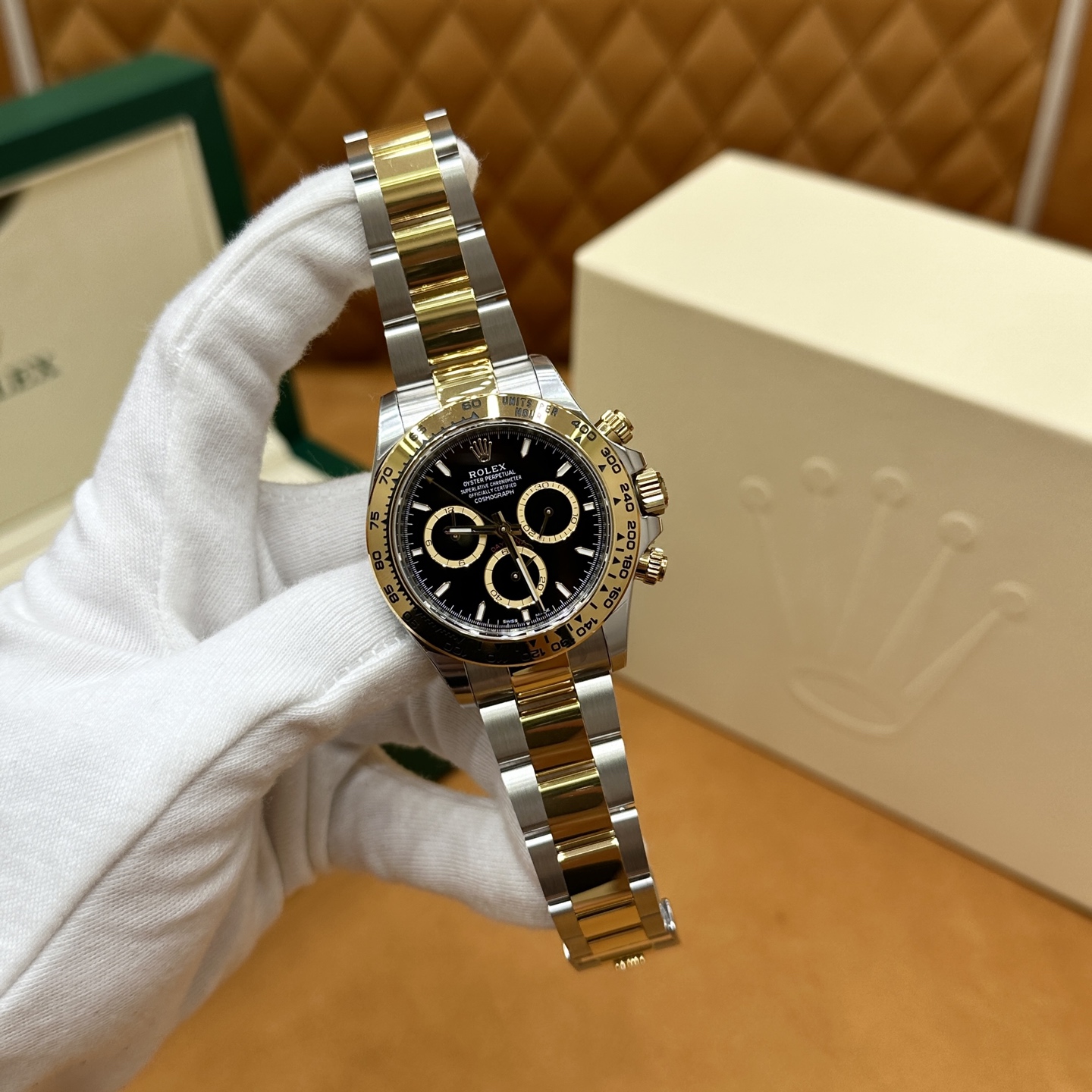
Clean Factory has historically been the benchmark for Rolex sports models. The community consensus is that Clean produces the most consistent exterior finishes, with case bevels that are hand-finished and dial printing that is clean under magnification. Their Daytona uses a Shanghai-made 4131 clone movement, which performs well but has a slightly darker bridge finish compared to the competition. From what I have seen in side-by-side comparisons, the Clean dial colors run slightly warmer than the genuine, though the difference is small enough that you need both watches in hand to notice.
VS Factory entered the Daytona space more recently but has made a strong impression with their Dandong-made 4131 clone. The Dandong movement uses a KIF shock absorber, which is the same type found in the genuine 4131, while the Shanghai movement in the Clean uses a different shock system. The Dandong 4131 also has a more refined bridge finish, with clearer Geneva stripes and better-polished bevels. One practical advantage is that the Dandong movement uses a bidirectional winding system, which makes the rotor feel smoother in daily use. If you care about the rolex replica watches experience on the wrist rather than just the spec sheet, that winding feel is something you notice every single day.
Price vs Consistency
The price difference is worth noting. Despite the Dandong movement being arguably the better-engineered clone, VS Factory pricing on the Daytona is often a few hundred dollars less than the Clean equivalent. That is not a sign of lower quality. It reflects the fact that Clean has spent more years building its brand recognition in the community, and some buyers are willing to pay a premium for the name.
BT Factory occupies a different tier. It is a mid-clone operation with a mixed catalog, and the quality is reference-dependent. For Daytona specifically, BT has produced some solid watches, but they are not in the same league as Clean or VS on either the movement or the finishing. If you are budget-constrained and absolutely must have a Daytona, BT can be a reasonable entry point, but go in with realistic expectations. The chronograph may function, but it will not feel the same, and the long-term reliability will not match the top-tier options.
The honest advice here is that if you can stretch to a Clean or VS Daytona, do it. The difference in movement quality and finishing is significant enough that the price gap feels justified after a few months of ownership. That is the kind of judgment you can only make after wearing both, and it is why I stopped chasing the absolute lowest price years ago.
Two Mistakes That Cost Real Money
The most expensive mistakes I see buyers make are not about picking the wrong dial color. They are about misunderstanding what they are actually paying for. Both of these mistakes have cost me money in the past, and I see new buyers make them every week.
Mistake One: Paying for “Perfect” When You Cannot See It
The first mistake is paying a premium for visual perfection on a closed-case watch. The Daytona has a solid caseback. Unless you are buying the platinum 126506 with the exhibition back, nobody is going to see the movement. Spending $300 more for slightly better bridge finishing on a movement that nobody will ever see is not a smart allocation of budget.
What you should be paying for is functional quality: a movement that winds smoothly, keeps time, and does not develop problems after six months. The exterior details matter, but only up to the point where they are visible on the wrist. Beyond that, you are paying for a spec sheet, not a watch. A high quality fake rolex is not the one with the most detailed movement decoration. It is the one that still runs correctly after a year of daily wear.
Mistake Two: Trusting the “1:1 Clone” Label Without Verification
Every seller claims their watch is a 1:1 clone. Almost none of them can prove it. The term has become so diluted that it is essentially meaningless in marketing copy. What you need to do instead is verify the specific movement model. Ask for photos of the movement with the caseback removed. Ask which factory made it. Ask for the movement’s power reserve and winding direction. A seller who can answer these questions clearly is a seller who knows their product. A seller who deflects or sends stock photos is a seller who is hoping you will not ask.
The other verification step is checking the sub-dial layout. A genuine Daytona has sub-dials at 3, 6, and 9 o’clock. Many cheap fakes use generic movements with sub-dials at 12, 9, and 6, which is an immediate giveaway. This is not a subtle detail. It is the first thing anyone who knows Daytonas will look at. If you are browsing imitation rolex watches and the seller cannot confirm the sub-dial positions, close the tab and move on.
My Wrist Test vs Macro Test Framework
Here is something I have developed over years of buying: the Wrist Test vs Macro Test framework. It has saved me from more bad purchases than any spec sheet ever could.
The Macro Test is what most buyers do. They zoom into photos, compare dial text kerning, count the number of stitches on the strap, and measure the bezel font thickness against a reference image. This is useful for screening out obvious junk, but it has a critical flaw. It evaluates the watch under conditions that do not exist in real life. Nobody examines your watch with a loupe at a dinner party. Nobody compares your bezel engraving to a photo on their phone at arm’s length.
The Wrist Test is what actually matters. Put the watch on. Wind it. Press the chronograph pushers. Feel the weight on your wrist. Check whether the bracelet pulls your hair. Look at the watch in natural light from a normal conversational distance. Does it look right? Does it feel right? That is the test that determines whether you will actually enjoy wearing the watch.
What I have learned is that a watch that passes the Wrist Test but fails the Macro Test is still a good watch. A watch that passes the Macro Test but fails the Wrist Test is a bad purchase. The movement’s smoothness, the bracelet’s articulation, the weight distribution on the wrist: these are the things you experience every day. The dial font on the sub-register at 9 o’clock is something you experience when you are trying to justify your purchase to yourself. This framework changes how I evaluate sellers, too. A seller who encourages you to ask about the Wrist Test experience, who can tell you how the watch feels when worn, is a seller who actually handles their products. A seller who only sends macro photos and spec sheets is a seller who is selling you a photograph, not a watch.
A Practical Buying Checklist Based on Experience
Based on everything I have learned, here is what I would do if I were buying a Daytona replica today. First, decide on the factory before deciding on the specific model. Clean or VS are the two names I would focus on. Second, confirm the movement model and the winding direction. A bidirectional winding 4131 clone with 72-hour power reserve is the target. Third, ask for real photos of the actual watch you will receive, not stock images. Fourth, confirm the return policy. Even the best factories have occasional quality control issues, and you want to know that you can send back a watch that has a movement problem.
A seller like replicafactory.cx has built a reputation in the community for carrying the right factories and being transparent about what they are selling. I have seen consistent feedback from buyers who received watches with the correct movement specifications and who were able to resolve minor issues through customer service. That kind of track record matters more than any single spec. If you are looking for the best replica rolex experience without the guesswork, start with a seller who will actually answer your questions about the movement.
One more thing: budget for a service. If you are spending $1,000 or more on a watch with a cloned chronograph movement, plan on spending $100-$150 on a proper clean and lubrication within the first year. This is not optional maintenance. It is the difference between a movement that lasts two years and one that lasts ten. The factories do not always lubricate their movements generously, and a dry movement will wear out its pivots much faster than a properly serviced one. Nobody tells you this when you buy, but it is the single most important piece of advice I can give for long-term ownership. When you buy a fake rolex, you are not just buying a watch. You are buying into a maintenance schedule that most sellers will never mention.
